
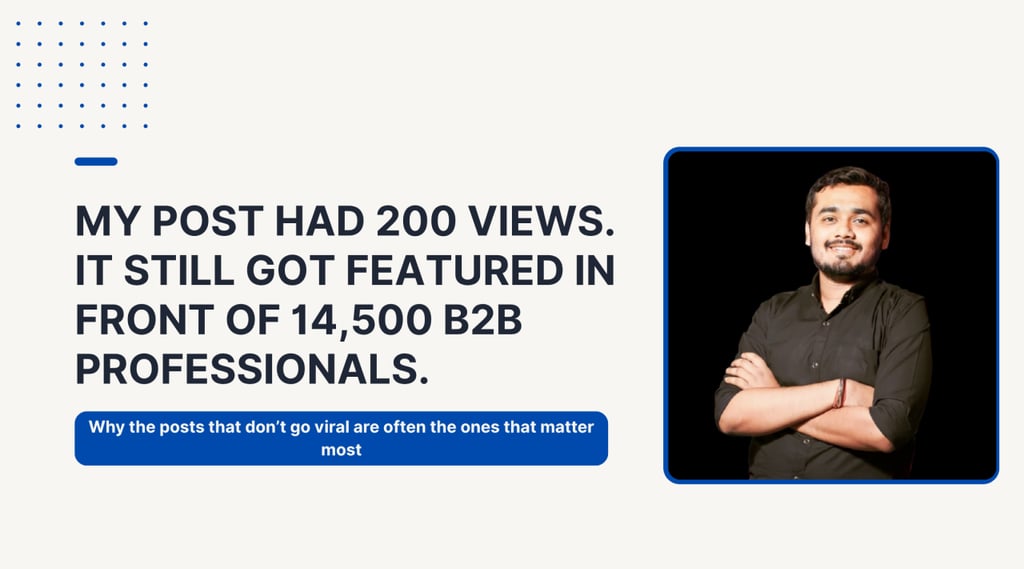
My Post Had 200 Views. It Still Got Featured in Front of 14,500 B2B Professionals.
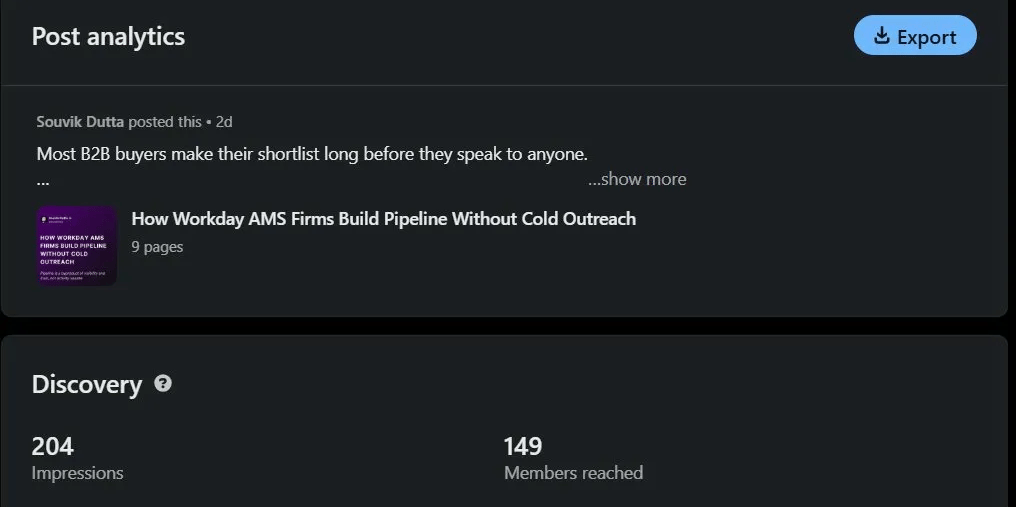
Most people would look at a post with 200 impressions and call it a failure.
I looked at mine and kept going.
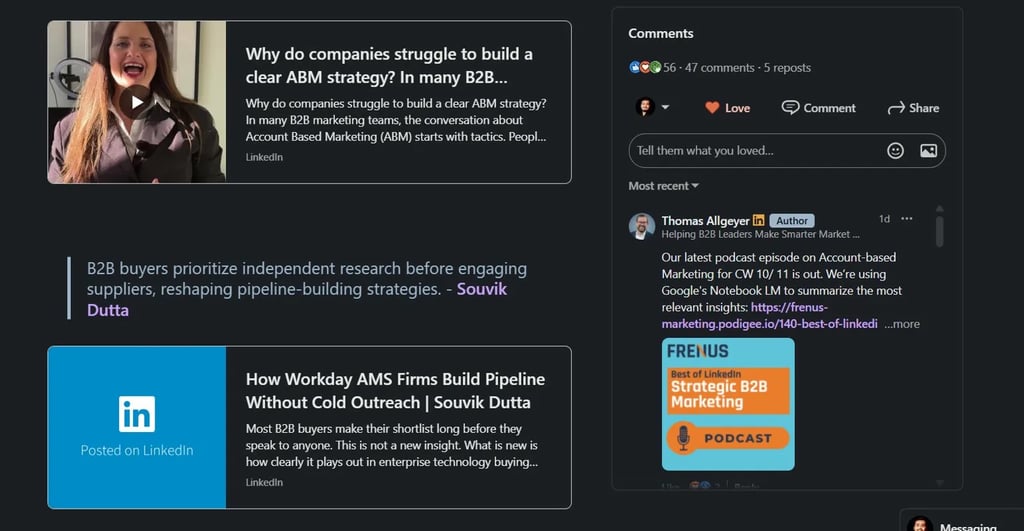
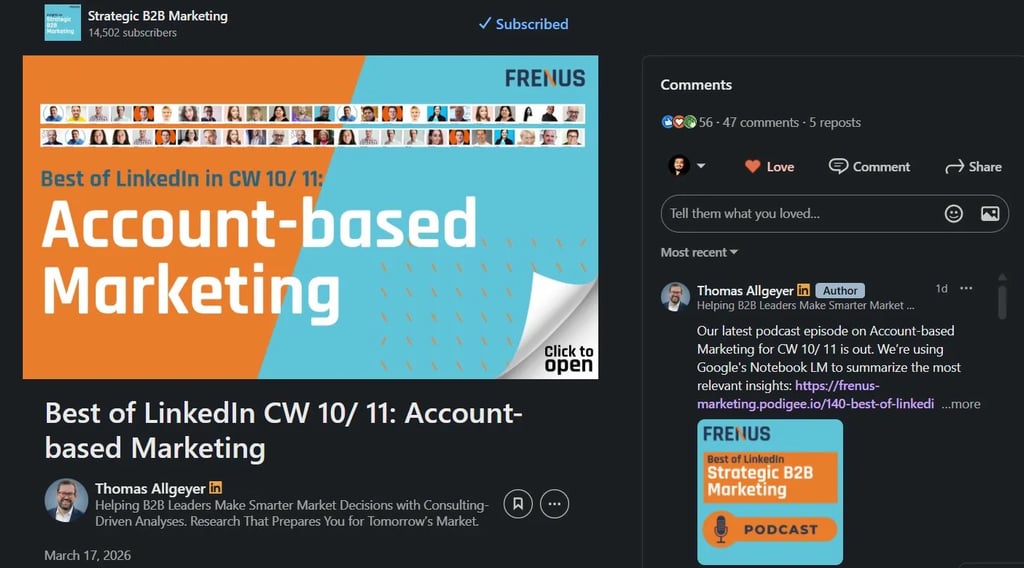
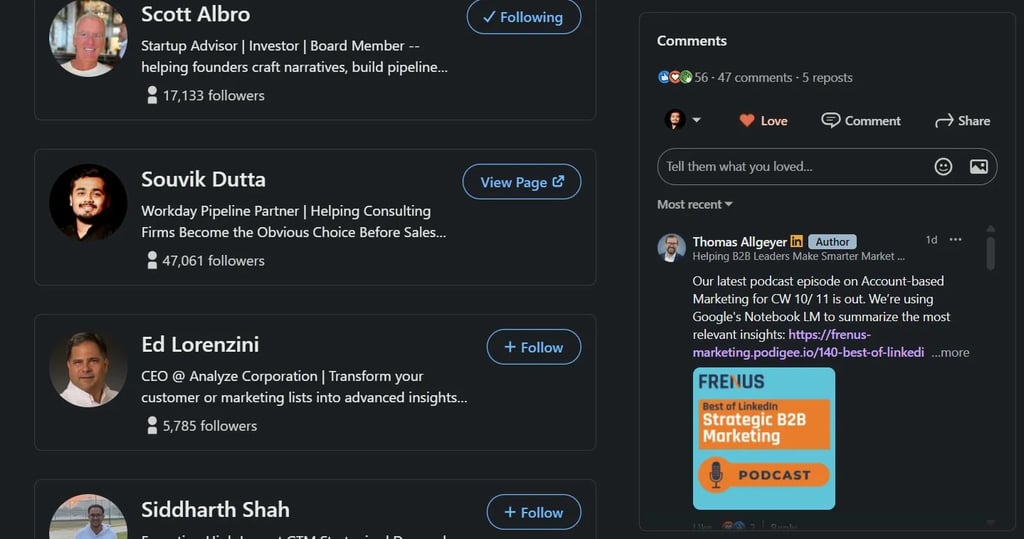
Two days later, that same post was handpicked by Thomas Allgeyer's Strategic B2B Marketing Community by Frenus Marketing newsletter read by 14,502 professionals across the global B2B marketing community. I was also named among 30 LinkedIn voices worth following for Account-based Marketing insights.
Not because the post went viral. Because it said something true, to the right people, with clarity.
That distinction matters more than most LinkedIn advice will ever tell you.
What the post actually said
The post that got featured wasn't a list. It wasn't a personal story about overcoming failure. It wasn't a carousel with 47 slides.
It was one observation:
"Most B2B buyers make their shortlist long before they speak to anyone."
That's it. One sentence that reflects a real buying behaviour that most Workday consulting firms either don't know about or don't act on.
The engagement was low by most standards 200 impressions, modest interaction. But somewhere in that audience was a curator with 14,500 subscribers who recognised the idea as worth amplifying.
You cannot predict which post that will be. You can only control whether you keep showing up with something worth saying.
What this means for Workday consulting firms
Here is the insight I want you to sit with:
Your buyers are not engaging with your posts.
They are reading them.
HR Directors, CFOs, and IT leaders researching Workday partners don't comment. They don't like. They don't share. They scroll quietly, observe, form impressions, and build mental shortlists weeks or months before any outreach happens.
The analytics don't show this. Your post with 12 likes looks identical to a post that was read by the exact person you've been trying to reach for six months.
This is what I call the silent research window and it is where most Workday firms are completely invisible.
Why low engagement doesn't mean low impact
There is a metric obsession on LinkedIn that is actively harming B2B pipeline development.
Firms post, check engagement, feel discouraged when numbers are low, post less, become invisible, wonder why pipeline is quiet.
The loop is self-defeating.
Here's what the data actually tells us: according to LinkedIn's own research, only about 1% of users create content, while 90% consume it silently. The people reading your content and forming opinions about your firm are overwhelmingly people who will never publicly interact with it.
This means your engagement rate is not a measure of your influence. It is a measure of the tiny fraction of people who chose to respond publicly.
The other 99% are still watching.
The real question is not "did it go viral?"
The real question is: Was it worth reading by the person who needed to read it?
That is a fundamentally different standard. And it changes everything about how you approach content.
When you write for virality, you optimise for broad appeal hooks that grab everyone, ideas that offend no one, formats that the algorithm rewards. You end up sounding like everyone else.
When you write for relevance, you say the specific true thing that the specific right person recognises immediately. It may reach fewer people. But the people it reaches are the ones who matter.
My 200-impression post was not written to go viral. It was written because I genuinely believe that Workday consulting firms are losing deals not because of capability gaps but because of visibility gaps and that observation needed to be said clearly.
A curator with 14,500 subscribers agreed.
What consistency actually means
I want to be honest about something.
Consistency is not about posting every day. It is not about maintaining a content calendar at all costs. It is not about showing up even when you have nothing to say.
Consistency means returning, again and again, to the same core truth the thing you genuinely understand better than most and finding new ways to make it useful to the people who need to hear it.
For me, that truth is this: Workday buyers shortlist in silence. Visibility shapes trust before conversations begin. LinkedIn is a research platform, not a posting platform.
I have written about this truth from dozens of angles. Some posts reached thousands. Some reached 200. Every single one added a layer to the positioning that eventually made a curator think this voice belongs in my roundup.
That accumulation is what consistency actually means.
What I would tell any Workday consulting firm right now
Stop measuring your LinkedIn activity by engagement.
Start measuring it by this question: if the right buyer read this post today, would they think differently about our firm tomorrow?
If the answer is yes, you posted something valuable. Whether it gets 12 likes or 1,200 is largely irrelevant to the pipeline it might quietly support.
The firms that understand this are building something that compounds. Every post adds to a body of work that tells a consistent story to anyone who lands on their profile whether that is today, next month, or next year when a procurement process begins and someone is quietly researching who to call.
The firms that don't understand this are chasing algorithms and wondering why their outreach isn't converting.
The uncomfortable truth about B2B visibility
Decision-makers don't tell you they've been reading your content.
They just call you when they're ready.
Or they don't call you at all because you weren't visible during the window when they were forming their shortlist.
There is no middle ground. You are either present in that silent research phase or you are absent from it. And absence, in a competitive Workday market, means being excluded before a conversation even starts.
My 200-impression post reached the right person. Not because of luck. Because it said something true, consistently, in a space where most firms are either silent or generic.
That is the only strategy that compounds over time.
A Final Thought
I don't know which of my next posts will get featured. I don't know which one will reach the person who becomes a client conversation six months from now.
Neither do you.
What I do know is that the firms that keep showing up with genuine insight, consistent positioning, and patience are the ones that eventually become the obvious choice before sales conversations begin.
That is the only metric worth building toward.
If you're leading a Workday consulting firm and you're unsure whether your LinkedIn presence is quietly supporting your pipeline or quietly costing you deals I offer a Workday LinkedIn Audit. No pressure, no guarantees. Just an honest assessment of where you stand and what the gap looks like.
Book a discovery call with me to find out if it's relevant for your situation.